
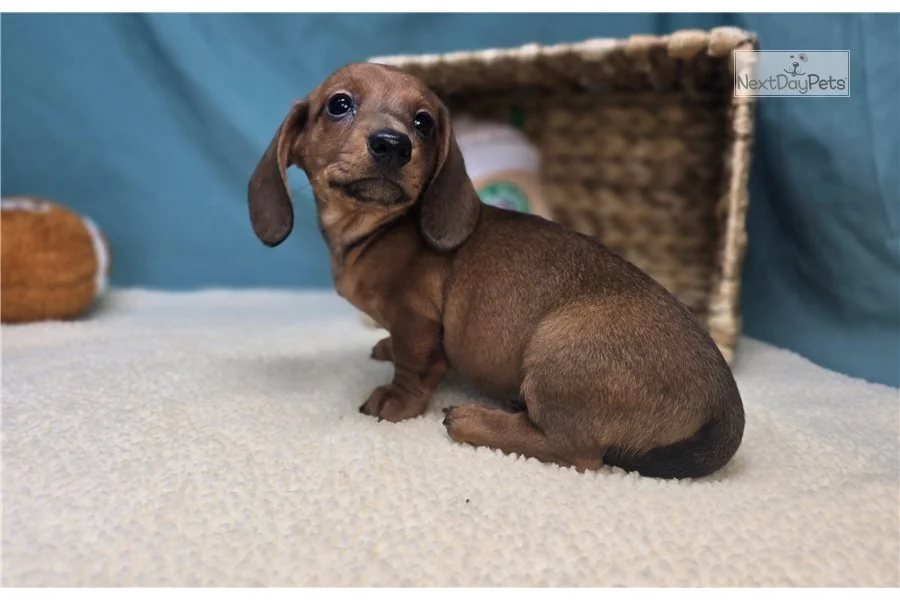
Bringing Your Dachshund Puppy Home
Everything you need to know to give your new Dachshund puppy the best possible start in their forever home.
The First 72 Hours
The first few days set the tone for your puppy's adjustment. Take it slow and let them settle in.
Keep Things Calm
Keep the environment calm and quiet during the first few days. Loud noises and chaos can overwhelm a new puppy.
Explore at Their Pace
Let your puppy explore their new surroundings at their own pace. Don't force interactions or rush introductions.
Establish a Potty Area
Designate a specific potty area right away and take your puppy there frequently to build good habits from day one.
Start Crate Training
Begin crate training immediately. The crate becomes their safe space — make it positive and never use it as punishment.
Limit Visitors
Don't overwhelm your puppy with visitors during the first few days. There will be plenty of time for introductions later.
Feeding Schedule
Proper nutrition is essential for your growing dachshund. Follow this age-based feeding guide.
Important: Dachshunds are prone to weight gain, and every extra pound puts direct pressure on their long spine. Measure food carefully and avoid table scraps. Portion sizes differ between Standard and Miniature Dachshunds, so consult your veterinarian for guidance specific to your puppy's size.
Potty & Crate Training Basics
Choose a wire crate sized for your Dachshund — 24 inches for Miniatures and 30–36 inches for Standards. Use a divider panel so the crate grows with your puppy — too much space and they may use one end as a bathroom.
Young puppies can't hold it more than 2–3 hours during the day. Take them outside frequently — after meals, after naps, and after playtime. Praise and reward every successful outdoor potty trip.
Dachshunds are clever but famously stubborn about housetraining, so consistency is key. Stick to a tight schedule, use high-value rewards, and stay patient — your Dachshund will catch on.
Full Potty Training Guide →Sleep
Puppies sleep 16–20 hours per day — this is completely normal and essential for healthy development. Don't worry if your new puppy seems to sleep all the time.
Place the crate in your bedroom initially. Being near you helps your puppy feel secure and makes nighttime potty trips easier during the first few weeks.
Dachshund Safety
Dachshunds are active, intelligent dogs with specific safety considerations. These precautions help keep them healthy.
Protect the Back (IVDD)
Dachshunds are prone to Intervertebral Disc Disease due to their long spine. Block access to high furniture, use ramps to couches and beds, and always support the chest and hindquarters when lifting.
Secure, Doxie-Proof Fencing
Dachshunds are bred to dig and track scents. Make sure your yard has secure fencing with no gaps at the bottom, and supervise outdoor time — they'll happily tunnel under a fence following a smell.
Ear Care Awareness
Dachshunds' long, low-set ears trap moisture and debris, making them prone to infections. Check and clean ears weekly and keep them dry after baths.
Stair & Jumping Limits
Repeated jumping off furniture and running up and down stairs stresses a Dachshund's spine. Carry puppies up stairs, use ramps, and discourage launching off couches and beds throughout life.
Mental Stimulation
Dachshunds are clever scent hounds that can become bored and destructive without a job. Provide puzzle toys, snuffle mats, training sessions, and short scent-based games to keep their minds engaged.
Grooming
Brushing by Coat Type
Smooth Dachshunds need a weekly brush with a rubber curry or hound mitt. Longhaireds need brushing two to three times a week to prevent tangles. Wirehaireds need periodic hand-stripping or trimming to keep the rough texture.
Bathing
Bathe your Dachshund every four to six weeks, or as needed when dirty. Use a gentle dog shampoo, dry the ears and armpits thoroughly, and brush the coat out fully before and after the bath.
Ear Cleaning
Clean ears weekly with a vet-approved ear cleaner. Dachshunds' long ears restrict airflow, so they're especially prone to ear infections — staying on top of ear care makes a real difference.
Dental & Nail Care
Brush teeth several times per week and trim nails every 2–3 weeks. Small breeds like Dachshunds are prone to dental disease, so regular tooth brushing is essential. See our nail trimming guide.
Exercise
Dachshund puppies need short, spine-friendly exercise — 5 minutes per month of age, a few times a day. As they mature, Dachshunds enjoy steady daily activity, but keep it low-impact: easy walks, flat-ground fetch, and gentle play rather than jumping or rough stairs.
Dachshunds can excel at nose work, tracking, and earthdog trials — sports that tap into their scent-hound heritage. Their bold, curious minds love having a job to do. Start basic training early and consider a puppy class.
Supplement physical exercise with mental stimulation through puzzle toys, snuffle mats, and short training sessions. Dachshunds are clever problem-solvers, and a mentally engaged Dachshund is a happy, well-behaved one.
When to Contact Your Vet
Contact your veterinarian promptly if you notice any of the following signs.
Puppy Supply Checklist
Make sure you have these essentials before bringing your Dachshund puppy home.
Have Questions About Puppy Care?
We're always here to help our puppy families. Don't hesitate to reach out with any questions.
Contact Us